
Human beings often carry the quiet belief that life demands some form of addiction. For some, it’s a cigarette or a drink. For others, it’s hours of gaming, scrolling endlessly on social media, or compulsive habits like pornography and gambling. Even seemingly harmless routines—like coffee dependency—can function as addictions.
But the question remains: Do humans truly need addiction to survive, or is addiction a substitute for something deeper that we are missing?
The Science of Why We Get Hooked
At the root of every addiction lies the dopamine system in our brain. Dopamine is a neurotransmitter often called the “reward chemical.” It is released when we experience pleasure, achieve goals, or anticipate rewards.
- Healthy dopamine release: Eating a nourishing meal, exercising, bonding with friends, learning something new.
- Addiction-driven dopamine release: Cigarettes, alcohol, pornography, drugs, or even excessive gaming.
The difference lies in intensity and speed. Addictive substances or behaviors hijack the brain, creating an unnaturally strong and fast dopamine spike. Over time, the brain begins to crave only those high-intensity rewards, ignoring the slower but healthier sources of joy.
Why People Believe They “Need” an Addiction
- Stress Relief – Addictions often become a quick escape when life feels overwhelming.
- Social Normalization – If everyone around you smokes or drinks, it feels natural to follow.
- Lack of Meaning – In the absence of purpose, people fill the void with short-term pleasures.
- Biological Vulnerability – Some individuals are genetically more prone to dependency.
It’s not the addiction that people need. It’s what lies underneath—comfort, excitement, belonging, or distraction—that they are actually searching for.
The Philosophical Perspective: A Hunger for Fulfillment

If we step back from neuroscience, addiction can also be seen as a misdirected spiritual hunger.
Humans are built not just to survive, but to seek connection, growth, and meaning. When these needs are unmet, addictions slip in as poor substitutes.
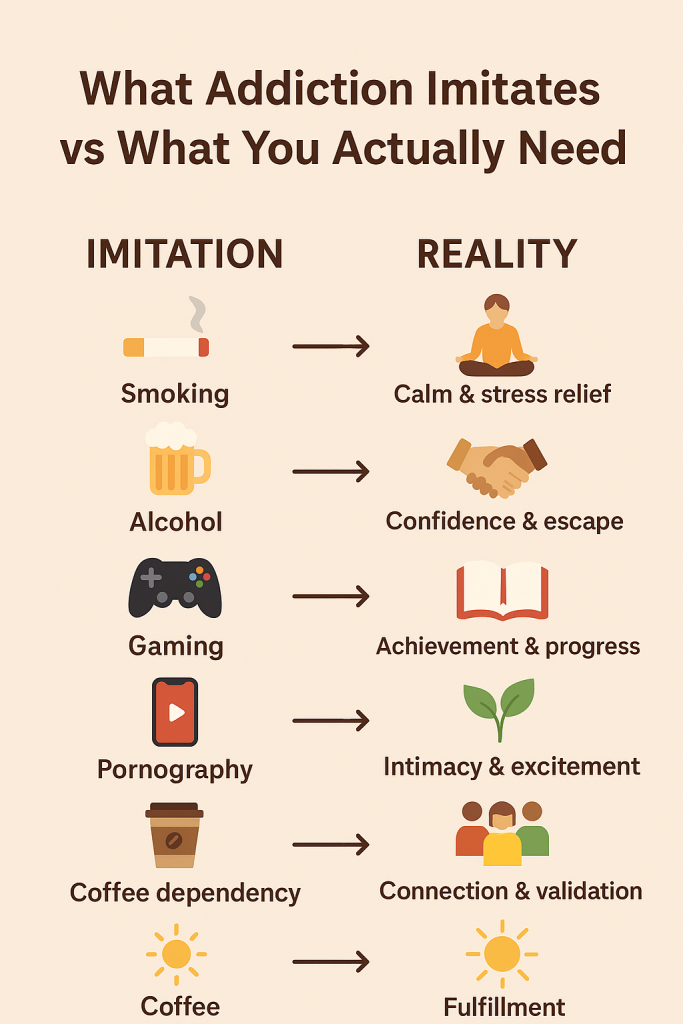
- Smoking may imitate calm.
- Alcohol may imitate confidence.
- Pornography may imitate intimacy.
- Gaming may imitate achievement.
- Social media may imitate connection.
But in each case, the imitation never fully satisfies, which is why the cycle of craving repeats.
Do We Actually Need Addiction to Function?
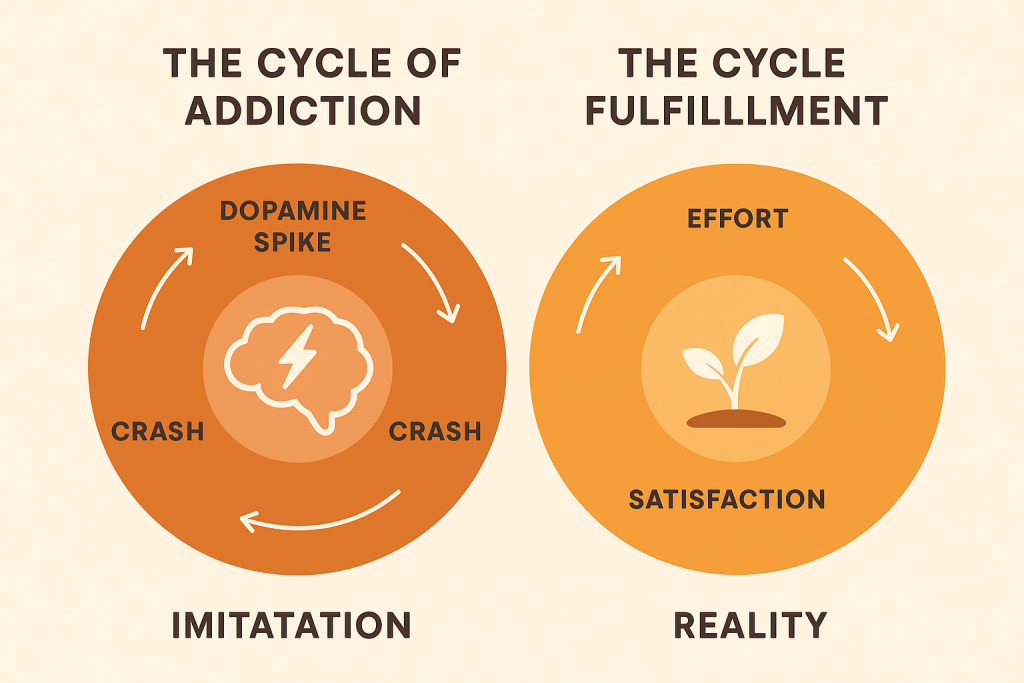
The truth is: no. Humans do not require addiction to function. What we require is stimulation, joy, and relief from suffering.
If we don’t cultivate healthy and natural sources of dopamine, the brain will chase artificial ones. Addiction is not a biological necessity—it’s a placeholder for unmet needs.
Healthy Alternatives: Replacing the Counterfeits
If every addiction is an imitation, what is the real thing it points to? Here’s a map of common addictions and their healthier replacements:
| Addiction | What it Imitates | Healthy Alternative |
|---|---|---|
| Smoking | Calm & stress relief | Deep breathing, meditation, walking in nature |
| Alcohol | Confidence & escape | Social bonding, creativity, journaling emotions |
| Gaming | Achievement & progress | Learning a skill, sports, challenges with real growth |
| Pornography | Intimacy & excitement | Genuine relationships, emotional closeness |
| Social media | Connection & validation | Face-to-face conversation, community activities |
| Coffee dependency | Energy & focus | Exercise, proper sleep, hydration |
Addiction is a shortcut. Fulfillment is the long road—but it’s the road that actually satisfies.
Breaking the Myth
The belief that humans need addiction is a cultural illusion. What we need are:
- Purpose to guide us.
- Connection to anchor us.
- Rhythms that sustain us.
- Fulfillment that nourishes us.
Addiction pretends to provide these, but it only gives a spark without a flame. The truth is: we don’t need addiction—we need wholeness.
Closing Thought
Every human has a choice: follow the easy road of addiction that numbs, or the harder road of fulfillment that heals. The first offers escape. The second offers meaning.
The heavy head after a cigarette, the guilt after hours of mindless scrolling, the emptiness after a binge—all are messages. They whisper the same truth: you don’t need this—you need something deeper.